
Not long ago I stood in Jerusalem near the Western Wall. I saw the massive stones of the Temple Mount lying in a heap as the Romans left them long ago. I also witnessed people standing before that wall, praying with all the fervor of their soul, their whole bodies engaged in supplicating the Almighty. I was given to understand that some of those people will spend many hours, day after day, before the wall praying for that day when the Temple would be restored to them. To many Jews the Temple was and is EVERYTHING!
Easter Sunday morning, April 3, 1836, Kirtland, Ohio: Joseph Smith and other members of the First Presidency opened up the Kirtland House of the Lord, and assisted the members to be seated. Joseph and that congregation of about 1000 persons, then became attentive listeners as Thomas B. Marsh and David W. Patten preached sabbath sermons from the stand. (*)
That afternoon the congregation came again. Members of the Twelve blessed the emblems of the sacrament and Joseph Smith and others helped pass it. Then according to witnesses, the veils were dropped in that large room dividing it into sections. Confirmations and the blessing of children was carried on in those gatherings as Joseph and Oliver Cowdery climbed the pulpits at the west end of the building.
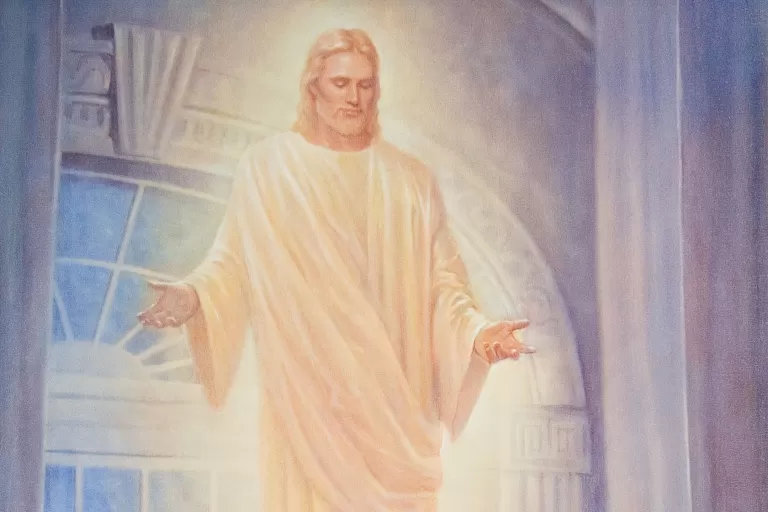
The pulpits themselves had been divided by veils according to tier. Joseph and Oliver climbed to the top tier reserved for the Presidency, and there knelt in silent prayer. Moments later, after arising from prayer, the Lord Jesus Christ appeared to them in glory, accepting that House and promising that therein he would appear to his servants and speak to them. He further promised that many tens of thousands would rejoice over the blessings and endowments that had been and would be poured out in that house. That sacred structure would become a monument famous the world over for what had been revealed there.
Well, the vision closed, and another vision burst upon them. Moses appeared and committed the keys of the gathering of Israel. Then came Elias and “committed the dispensation of the gospel of Abraham, saying that in them and their seed all generations after them should be blessed.” And then lastly, Elijah, the prophet, holding the keys of the sealing power, appeared and committed his keys unto them. (**)
Now it was no accident that Elijah appeared on that day. It was the season of the Passover and Jews the world over had continued to set a place for that prophet whose return had been prophesied for two millennia. Moreover, it was no coincidence that Jesus appeared on that Easter Sabbath. It had been 1,803 years to the very day since the Savior’s resurrection.
“So, how often does Easter Sunday occur on both April 3 and 16 Nisan, as it did in A.D. 33? It happens less than once every century, on the average. The year 1836 was the only such occurrence in the nineteenth century.” (**)
On that day, monumental and eternally orchestrated, all the keys of the priesthood necessary to gather the lost families of Israel, organize them once again into family units, and seal upon them the ordinances to exalt them were made fully operative. Unequivocally, individually and collectively, it was the most important single day in human history since the resurrection of Jesus Christ.
Story Credits
Glenn Rawson – March 2019
Music: “The Spirt of God” – Paul Cardall
Song: “The Spirit of God” – The Tabernacle Choir and Orchestra
Sources:
- The Joseph Smith Papers: Journal, 1835-1836
- The Church of Jesus Christ of Latter-Day Saints: The Restoration of Priesthood Keys on Easter 1836